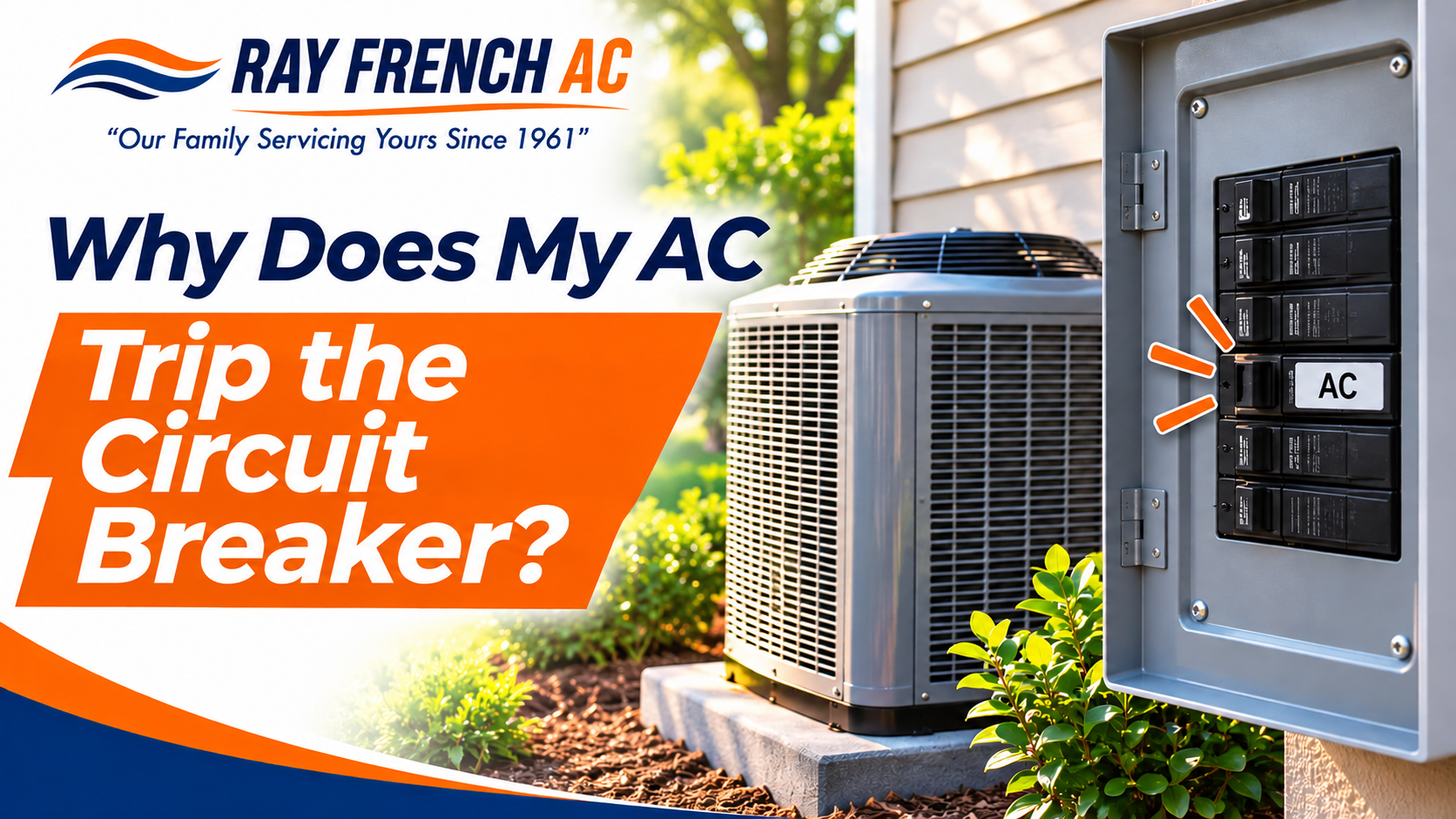
Common Reasons Why Your AC Trips the Circuit Breaker
Florida homeowners depend on their air conditioning systems to keep their homes comfortable throughout much of the year. When temperatures climb and humidity levels rise, the last thing you want is an air conditioner that suddenly shuts off. If your AC stops working and you discover that it has tripped a circuit breaker, you might wonder whether it’s a simple electrical issue or a sign of a more serious problem.
A circuit breaker that trips occasionally may seem like a minor inconvenience, but repeated trips should never be ignored. Your home’s electrical system includes circuit breakers designed to protect wiring and equipment from dangerous electrical conditions. When your air conditioner repeatedly trips a breaker, something may be causing excessive electrical demand, a short circuit, or another malfunction.
At Ray French Air Conditioning & Heating, we understand how frustrating unexpected cooling problems can be, especially during Gainesville’s hot summer months. Understanding why your AC trips the circuit breaker, what you can safely check, and when to contact an HVAC professional can help protect your equipment and restore reliable cooling.
What Does It Mean When Your AC Trips a Circuit Breaker?
Your home’s electrical panel contains circuit breakers that control and protect individual electrical circuits. These breakers automatically interrupt electricity when they detect certain unsafe conditions, such as excessive current or a short circuit.
Your air conditioning system typically uses a dedicated electrical circuit because it requires significant power to operate.
When your AC trips its breaker, the breaker shuts off electricity to the affected circuit to help prevent overheating, electrical damage, and potential fire hazards.
A breaker trip doesn’t necessarily mean the breaker itself is defective. In many cases, it is doing exactly what it was designed to do.
The important question is what caused the breaker to trip in the first place?
Some causes involve relatively straightforward maintenance issues, while others require professional electrical testing or HVAC repairs.
1. A Dirty Air Filter Is Restricting Airflow
One of the simplest problems that can contribute to HVAC performance issues is a dirty or clogged air filter.
Your air conditioner relies on consistent airflow to move warm indoor air across the evaporator coil. When a filter becomes excessively dirty, it restricts airflow and forces the system to operate under less-than-ideal conditions.
Reduced airflow can cause the evaporator coil to become too cold, potentially allowing ice to form.
Although a dirty filter doesn’t normally trip a circuit breaker directly, severe airflow problems can contribute to abnormal operating conditions that place additional stress on HVAC components.
What Should You Do?
Inspect your air filter and replace it if it is visibly dirty or overdue for replacement.
During Florida’s warmer months, homeowners should check their filters regularly because air conditioning systems often operate for extended periods.
If your breaker continues tripping after replacing the filter, professional diagnosis is necessary to determine the actual electrical cause.
2. Your Outdoor AC Unit Has Dirty Condenser Coils
Your outdoor condenser plays an important role in releasing heat collected from inside your home.
As your air conditioner operates, refrigerant carries heat outdoors, where the condenser coil helps transfer that heat into the surrounding air.
Over time, dirt, grass clippings, leaves, and other debris can accumulate on the condenser coils.
When these coils become heavily contaminated, the system may struggle to release heat efficiently.
This can increase operating pressures and place additional demand on the compressor. Under certain conditions, excessive electrical current may contribute to a tripped breaker.
Why This Matters in Gainesville
North Florida’s long cooling season means outdoor air conditioning equipment may operate frequently throughout the year.
Combined with vegetation growth, pollen, and outdoor debris, condenser coils can become dirty without homeowners realizing it.
Keeping the area around your outdoor unit clear and scheduling professional coil cleaning can help maintain proper system performance.
3. Your AC Compressor Is Experiencing Electrical Problems
The compressor is one of the most important components in your air conditioning system.
It circulates refrigerant through the cooling system, allowing heat to be transferred from inside your home to the outdoors.
Because the compressor uses a powerful electric motor, it requires substantial electrical current, particularly during startup.
If the compressor begins to fail, develops internal electrical damage, or experiences mechanical resistance, it may draw excessive current.
This can cause the circuit breaker to trip.
Signs of Compressor Problems
Common warning signs include:
-
A breaker that trips when the outdoor unit attempts to start
-
Humming or buzzing noises from the condenser
-
An outdoor unit that struggles to start
-
Reduced cooling performance
-
Repeated electrical shutdowns
Compressor problems can be serious and may require extensive repairs.
However, a breaker trip doesn’t automatically mean your compressor needs replacement. Other electrical components can produce similar symptoms.
A qualified HVAC technician can perform electrical testing to identify the underlying problem before recommending repairs.
4. A Failing Capacitor Is Affecting Your AC System
Capacitors are electrical components that help certain HVAC motors start and operate properly.
Your air conditioner may use capacitors associated with the compressor, condenser fan motor, or indoor blower motor.
When a capacitor begins to fail, the affected motor may have difficulty starting or operating correctly.
A motor that struggles to start may draw excessive electrical current, potentially causing the breaker to trip.
What Are the Warning Signs?
You might notice the outdoor unit humming without starting, the condenser fan failing to spin, or the system shutting down unexpectedly.
Capacitor problems are relatively common in air conditioning equipment, particularly systems exposed to prolonged operation and high outdoor temperatures.
Never attempt to inspect, disconnect, or replace an HVAC capacitor yourself. Capacitors can retain a dangerous electrical charge even after power has been disconnected.
Professional technicians have the training and equipment necessary to test these components safely.
5. Your AC Has a Short Circuit or Damaged Wiring
Electrical wiring carries power to the various components of your air conditioning system.
Over time, wiring can become damaged due to age, vibration, moisture, corrosion, pests, or improper installation.
A short circuit occurs when electricity travels along an unintended path, potentially allowing a large amount of current to flow.
When this happens, the circuit breaker may trip immediately to protect the electrical system.
Damaged wiring may also create other dangerous conditions, including overheating and electrical arcing.
Warning Signs of Electrical Problems
Potential warning signs include burning odors, visible wire damage, unusual buzzing sounds, or a breaker that trips immediately when the AC attempts to start.
If you notice these symptoms, leave the affected circuit off and contact a qualified professional.
Electrical problems should never be treated as routine DIY repairs.
6. Your Condenser Fan Motor Is Failing
The outdoor condenser fan helps move air across the condenser coil so your air conditioner can release heat efficiently.
If the fan motor begins to fail, the system may struggle to maintain normal operating conditions.
A failing motor can sometimes draw excessive electrical current, contributing to breaker trips.
Additionally, when the condenser fan isn’t operating properly, refrigerant pressures may rise, increasing stress on other components.
Signs of a failing condenser fan include unusual grinding noises, a fan that won’t start, intermittent fan operation, or an outdoor unit that overheats.
If your condenser fan isn’t working, turn the cooling system off and schedule professional service rather than allowing the compressor to continue operating without proper airflow.
7. Your Indoor Blower Motor Is Overheating
While homeowners often focus on the outdoor AC unit, the indoor air handler is equally important.
The blower motor moves conditioned air through your ductwork and distributes it throughout your home.
If the blower motor develops mechanical or electrical problems, it may overheat or draw excessive current.
This can trip the circuit breaker protecting the indoor equipment.
Possible causes include worn motor bearings, electrical faults, damaged components, or severe airflow restrictions.
You might notice weak airflow, unusual noises, or a blower that stops operating unexpectedly.
Because many HVAC systems have separate electrical circuits for indoor and outdoor equipment, identifying which breaker is tripping can help a technician narrow down the problem.
8. Your Circuit Breaker May Be Worn Out
Sometimes the problem originates in the electrical panel rather than the air conditioning equipment.
Circuit breakers can deteriorate over time, particularly after years of use or repeated electrical trips.
A worn or defective breaker may trip under conditions that wouldn’t normally cause a properly functioning breaker to open.
However, a failing breaker should only be considered after other electrical problems have been evaluated.
Never replace an AC breaker with one that has a higher amperage rating simply to prevent it from tripping.
Circuit breakers must be correctly sized for the electrical wiring and equipment they protect.
Installing an improperly sized breaker can create a serious fire hazard.
A licensed electrician can evaluate the breaker, wiring, and electrical panel when necessary.
9. Your AC System Has an Electrical Ground Fault
A ground fault occurs when electrical current travels along an unintended path toward ground.
Ground faults may develop because of damaged insulation, moisture intrusion, deteriorating components, or wiring problems.
Outdoor HVAC equipment is exposed to rain, humidity, and changing weather conditions, making proper electrical protection especially important.
Depending on the electrical system and protective devices installed, a ground fault may cause a breaker or ground-fault protective device to trip.
Ground faults can create shock hazards and should be investigated by a qualified professional.
If your AC breaker repeatedly trips after rain or during wet weather, mention this pattern when scheduling service.
Why You Shouldn’t Keep Resetting a Tripped AC Breaker
When your air conditioner stops working, resetting the breaker may seem like the fastest way to restore cooling.
However, repeatedly resetting a breaker without identifying the cause can be dangerous.
A circuit breaker is a protective device, not an ordinary on-and-off switch for troubleshooting a malfunctioning HVAC system.
If an electrical problem remains unresolved, restoring power repeatedly may expose equipment and wiring to additional damage.
It can also increase the risk of overheating or electrical hazards.
If your AC breaker trips, turn the thermostat’s cooling function off and avoid repeatedly resetting the breaker.
If there are burning smells, smoke, unusual electrical noises, or signs of damaged wiring, do not attempt a reset.
Contact a qualified HVAC technician or licensed electrician to investigate the issue.
Can Regular HVAC Maintenance Help Prevent Breaker Trips?
Not every electrical failure can be prevented, but routine HVAC maintenance can help identify developing problems before they cause unexpected shutdowns.
During a professional maintenance appointment, an HVAC technician may inspect electrical connections, test appropriate components, evaluate motor operation, and check system performance.
Maintenance may also include cleaning condenser coils, inspecting airflow, evaluating refrigerant performance, and checking condensate drainage.
These services help support efficient operation and can reduce unnecessary stress on HVAC components.
For Gainesville homeowners, preventive maintenance is particularly valuable because air conditioning systems frequently operate for much of the year.
Addressing minor problems early may help reduce the likelihood of unexpected breakdowns during the hottest months.
When Should You Call an HVAC Technician?
A tripped breaker doesn’t always indicate a major repair, but certain warning signs require prompt professional attention.
Schedule HVAC service if your air conditioner repeatedly trips the breaker, fails to start, produces unusual noises, or stops cooling effectively.
You should also seek professional assistance if the breaker trips immediately when cooling begins or if the problem occurs during wet weather.
If the breaker itself feels unusually hot, produces a burning odor, or shows visible damage, leave it alone and contact a licensed electrician.
An HVAC technician can evaluate the air conditioning equipment, while a licensed electrician may be needed for problems involving the electrical panel or household wiring.
Trust Ray French Air Conditioning & Heating for AC Repair in Gainesville, FL
Your air conditioner should provide dependable comfort without repeatedly shutting down or interrupting your home’s electrical system.
If your AC keeps tripping the circuit breaker, it’s important to identify the underlying cause rather than continuing to reset it.
At Ray French Air Conditioning & Heating, our family has been serving Gainesville and surrounding North Florida communities since 1961.
We understand the demands Florida’s climate places on residential cooling systems and the importance of keeping your HVAC equipment operating safely and efficiently.
Whether your air conditioner is experiencing electrical problems, struggling to start, or unexpectedly shutting down, our team can help diagnose HVAC-related issues and recommend appropriate repairs.
Is your AC repeatedly tripping the circuit breaker? Contact Ray French Air Conditioning & Heating today to schedule professional AC repair in Gainesville, FL, and get your cooling system back to reliable operation.